Tropos
A study of how AI agents remember, adapt, and reframe plans while keeping people in control.
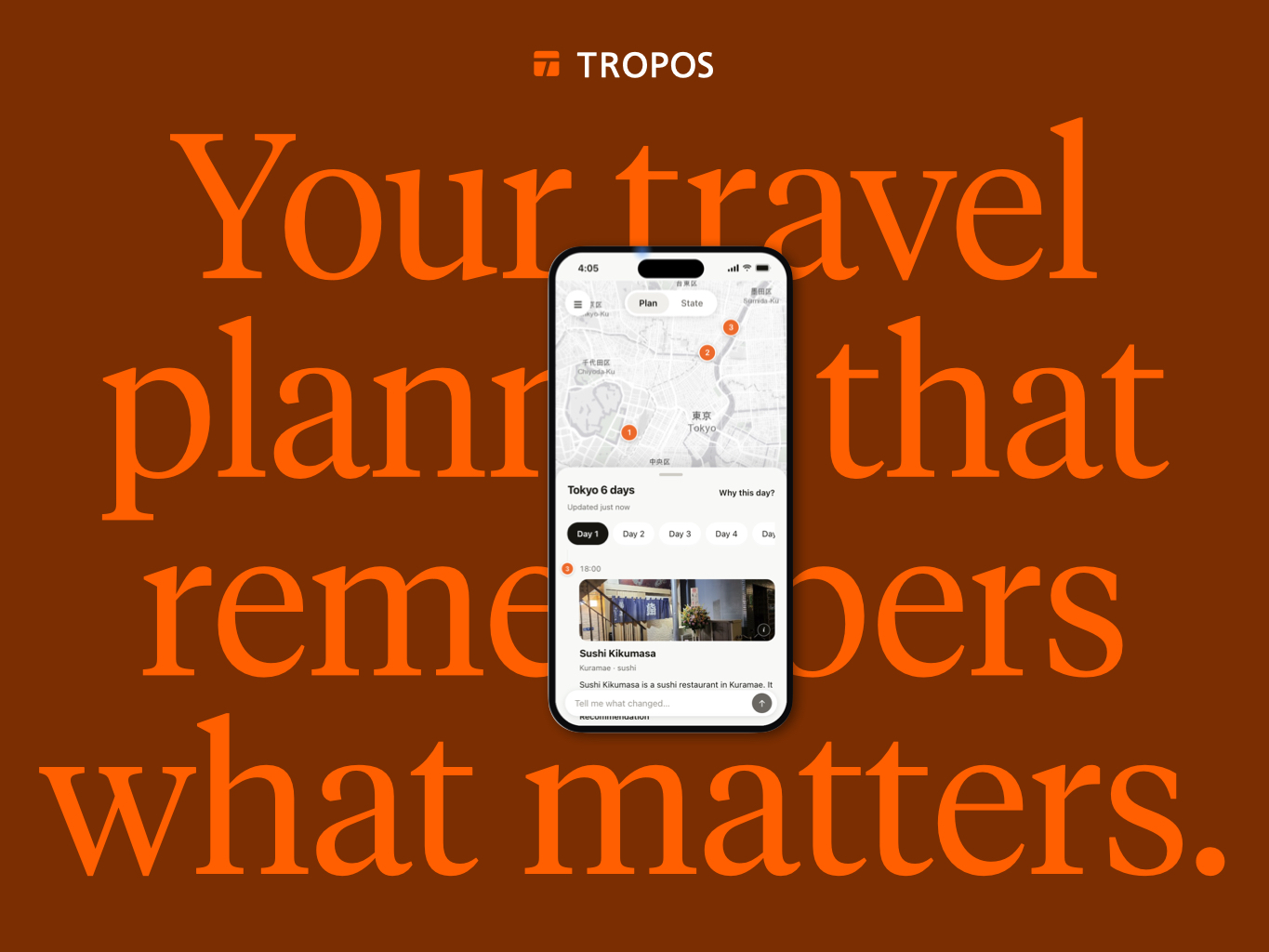
How might we create an AI agent that continuously aligns with users’ intentions and priorities, enabling more intuitive and trustworthy collaboration?
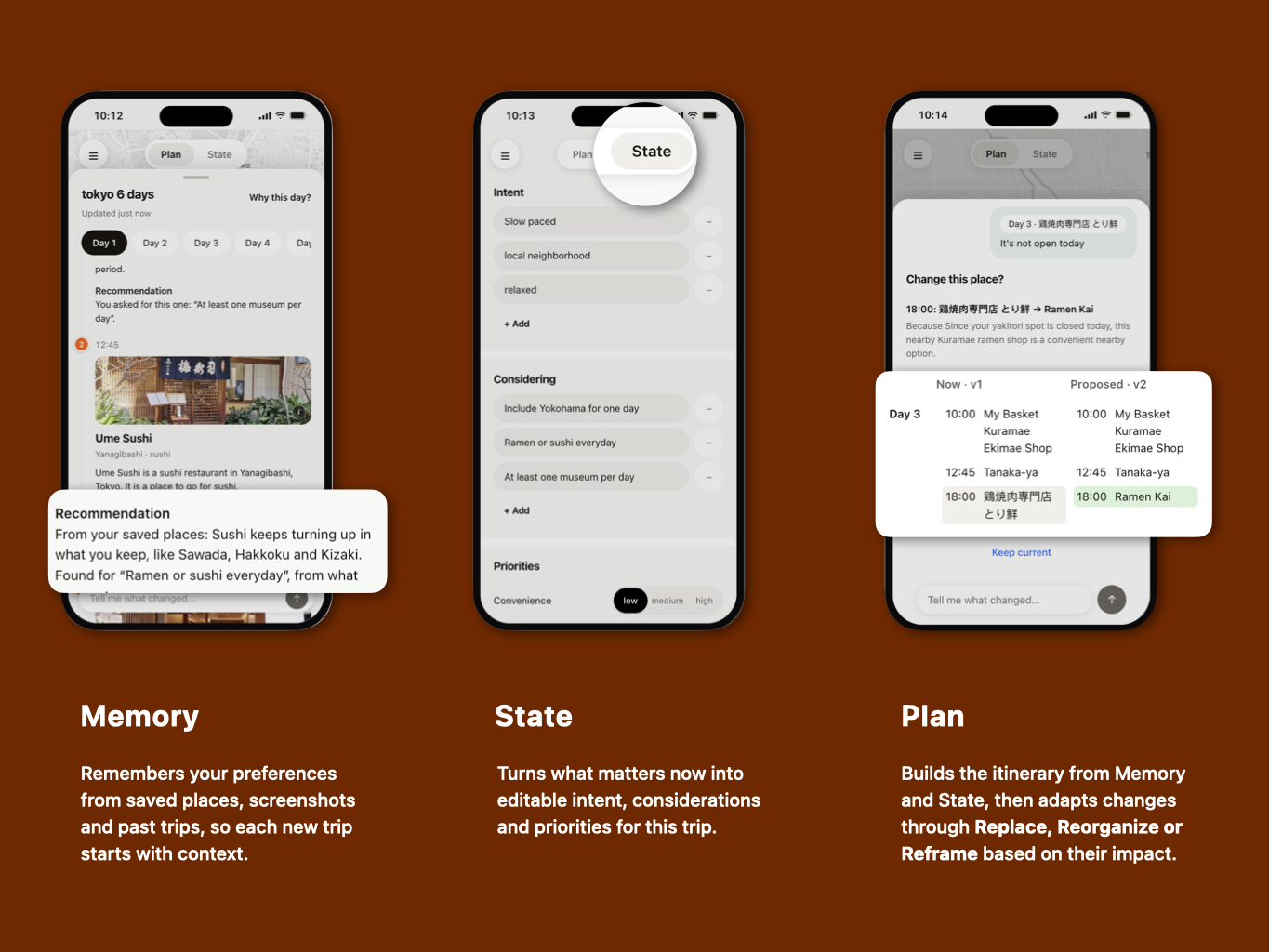
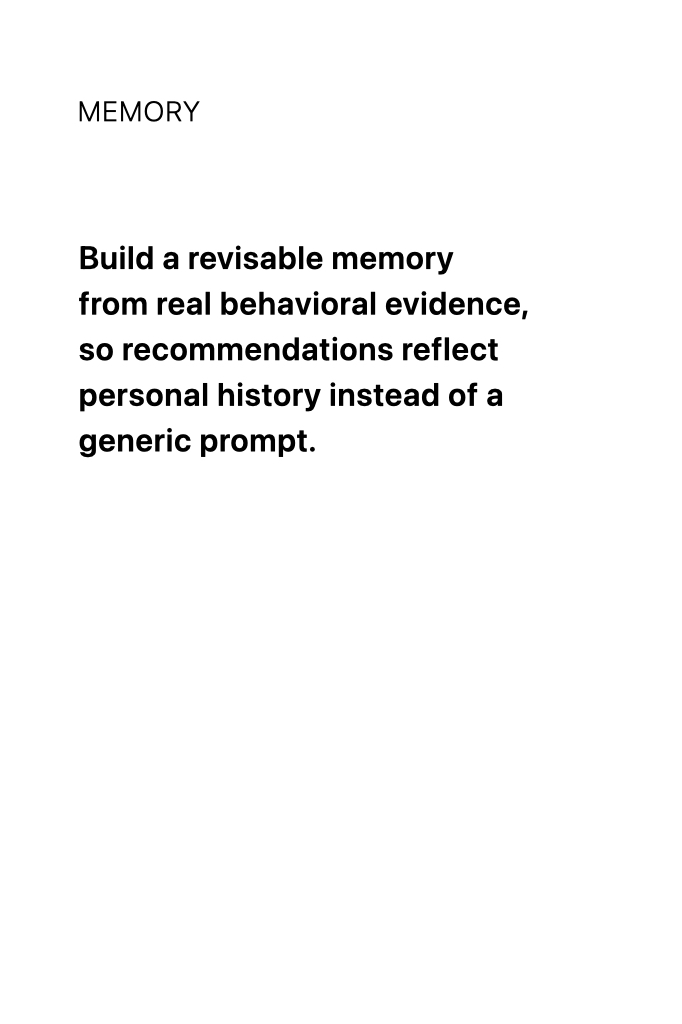
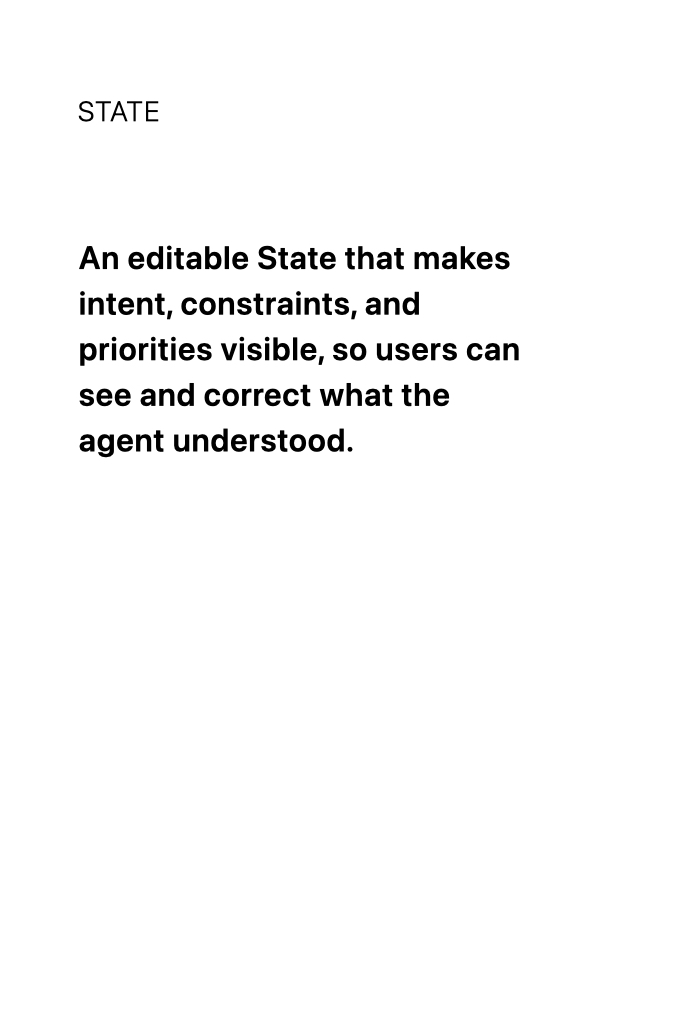
Trust in Human-AI collaboration comes less from explanation alone than from a shared and editable understanding of what the agent knows, intends to change, and allow people to confirm.
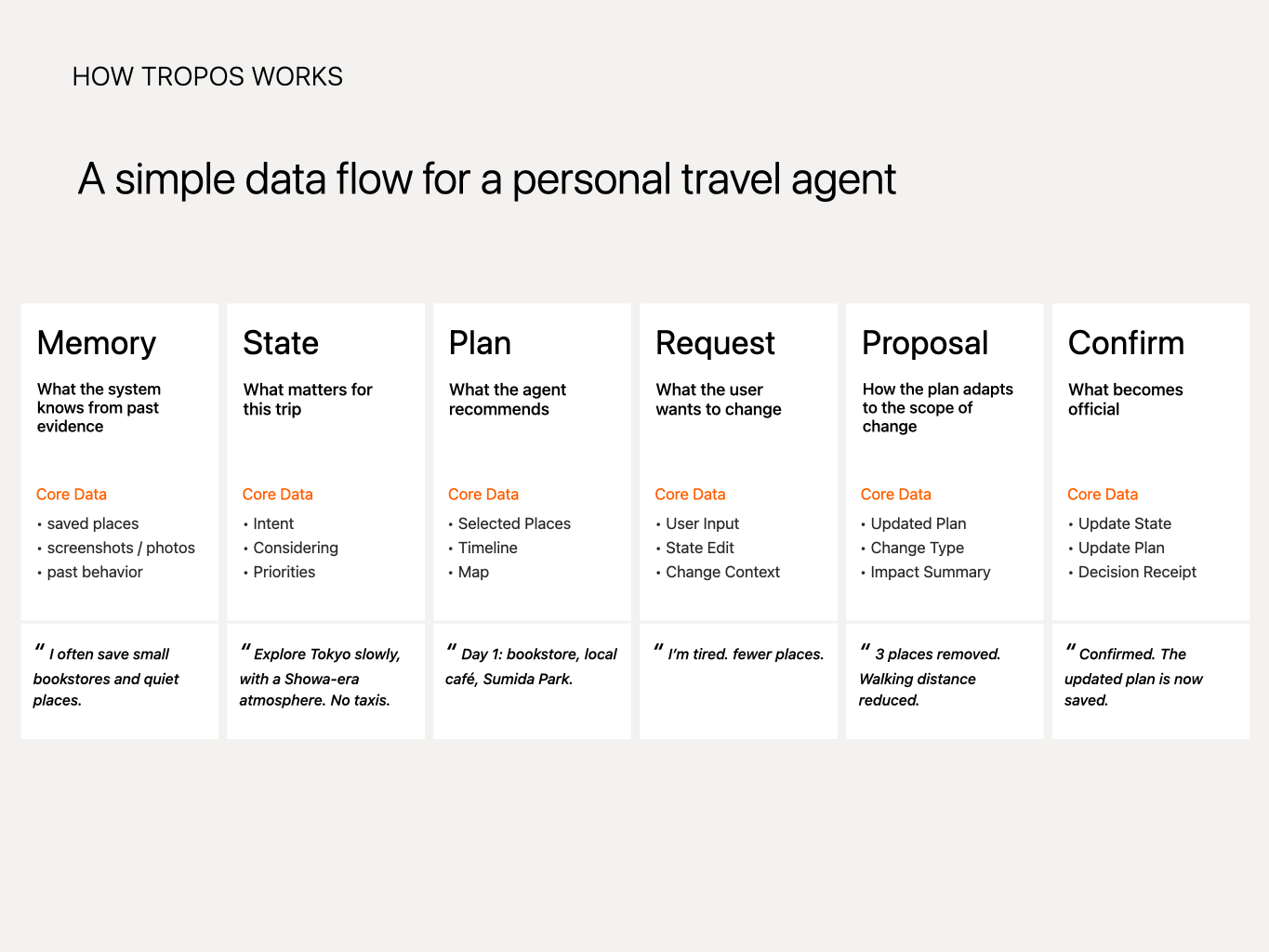
Tropos is a personal AI travel agent that explores how memory, shared state and transparency in decision making can enhance the experience of human and AI collaboration. Instead of relying on a prompt and generating a result directly, the project combines user’s saved place on Google Maps, screenshots, travel photos and past behavioral patterns to build a revisable memory of the user. For each new trip, the user’s intent and constraints are translated into a structured State. The agent then generates recommendations and itinerary based on Memory and State, and user can see and inspect the reasoning behind recommendation and how new information influenced the plan. The design question of the project is how humans and AI can realign a shared understanding of intent and build meaningful travel experience for people.
Challenge
LLMs nowadays can generate reasonable travel itineraries for everyone. However, most still begin with simple prompt-to-response interaction with limited understanding of personal preferences, such as saved items on maps or information captured in photos. Even when personalization exists, it often come without explaining how recommendations relate to personal intent and considerations, not mention temporal and spatial dependencies. The design challenge therefore became essential : how to create an agent that continuously realign with user’s intent and considerations and enable more trustworthy and intuitive collaboration.
Solution
Since the project focuses on agent memory and AI-human collaboration, I structured the product in three distinct layers: Memory, State and Plan. Memory captures persistent preference from sources like user’s saved places from Google Maps, screenshots and travel photos. State represents what matters for the current trip and translates natural language input from user into editable Intent, Considering and Priorities. Plan is the itinerary presented through a map and timeline. These layers create a transparent contract so users can inspect and understand the reasons behind the plan.
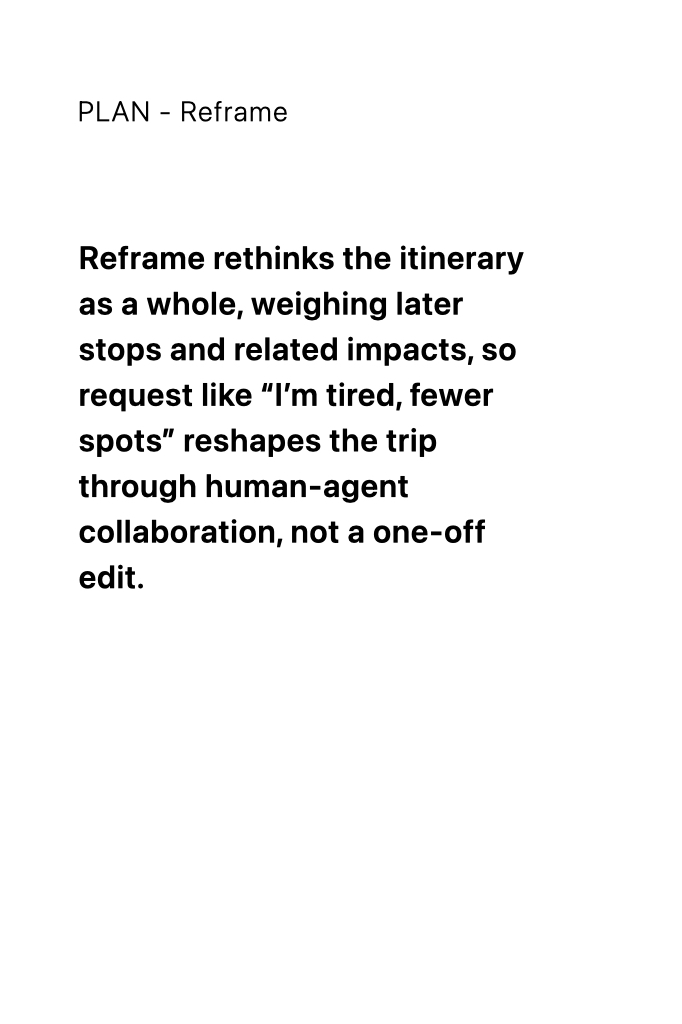
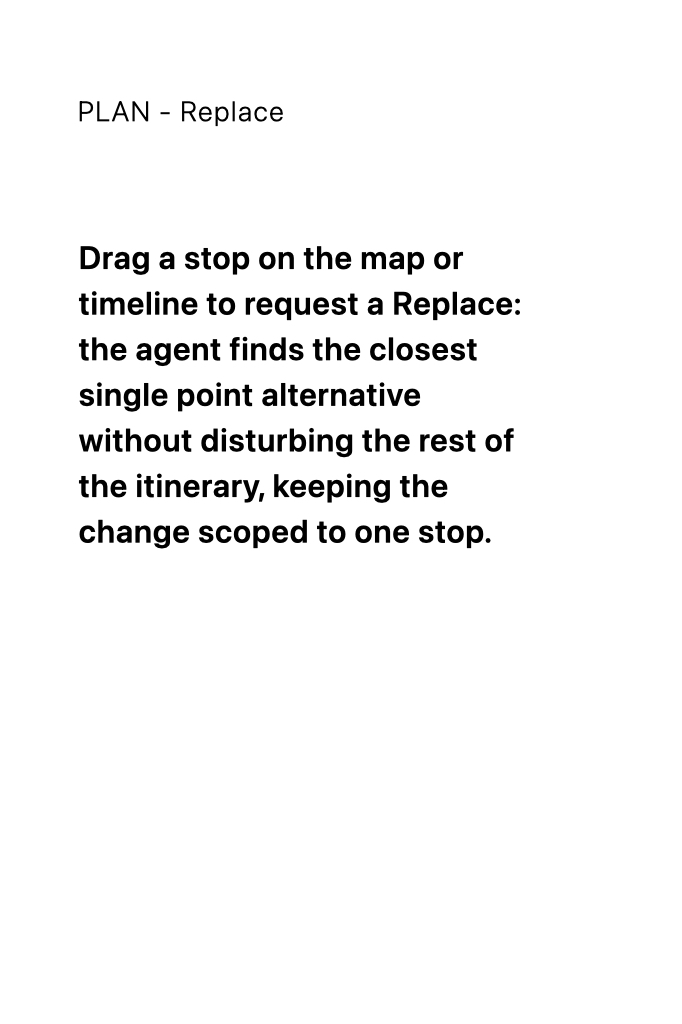
When user request changes during the trip, the agent classifies the request as Replace, Reorganize or Reframe based on its scope and dependencies affecting the itinerary. For example, when a Ramen shop is closed and user request an alternative, the agent replaces it. On the other hand, if user says “I am tired, fewer spots”, then the agent will not only decrease the spots, but try to reorganize the itinerary on the following days. All changes proposed by agent will be reviewed and confirmed by the user.
Learning
The key learnings from this project reflect my broader interest in how memory and human-AI alignment can enhance user experience. First, useful memory requires provenance, and user should be able to distinguish what they explicitly saved, what was inferred from different resources, and what belongs only to the current task or trip.
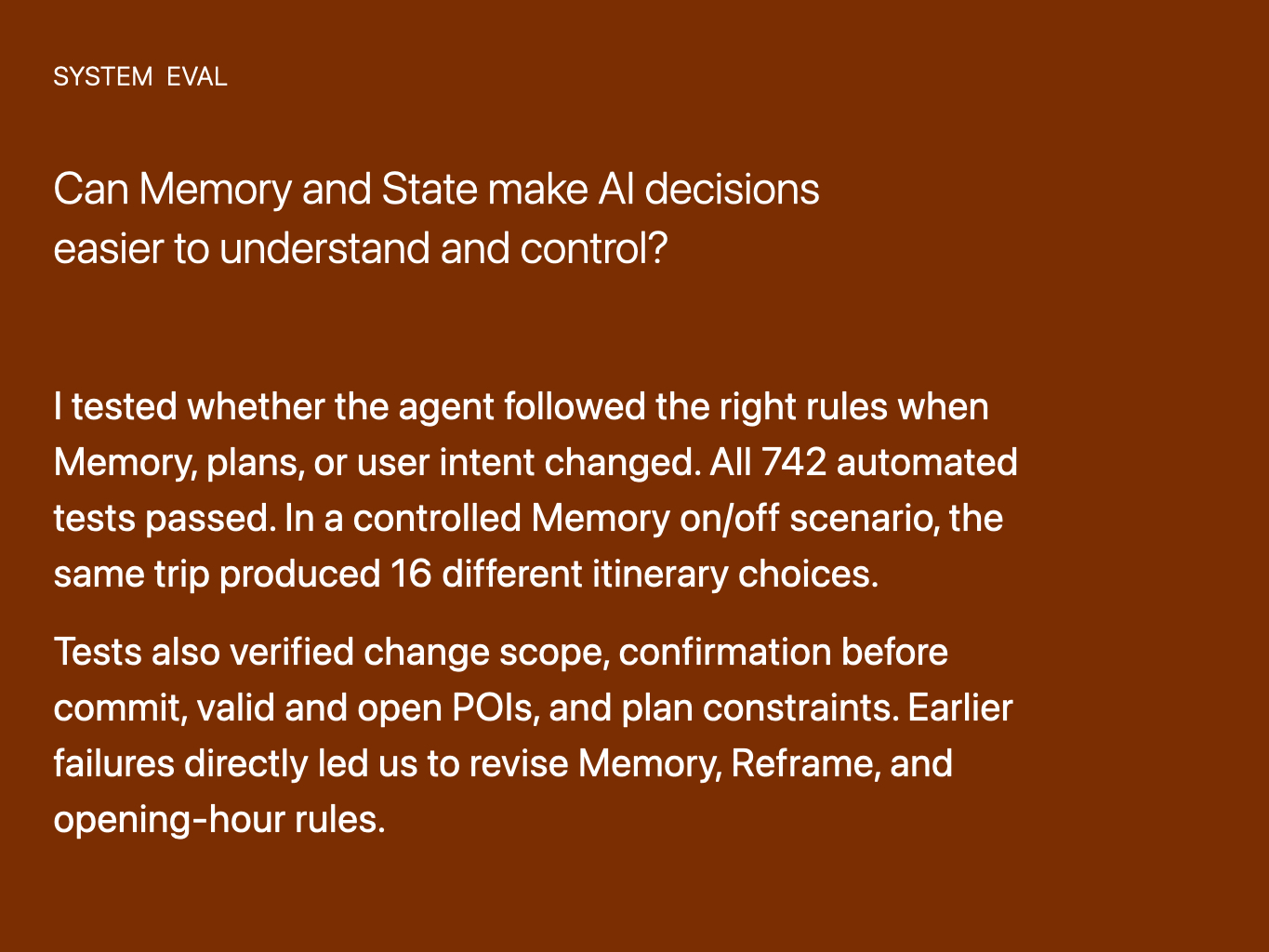
In this project, State emerged as a critical layer between agent and user. By making State visible and editable, the agent and user gain a shared reference for alignment and correction. Trust came less from explanation alone and more from legibility and confirmation: Knowing what the agent used, what it plans to change, what else will be affected, and whether the user can cancel or correct it. This is crucial because it reveals how the agent understands user intent and generates recommendations, helping people feel more in control and build trust.
Vision
The vision of the project is to move from an intent-aware agent toward a situation-aware agent. The current system understands what matter to users through memory and state. However, decision making and satisfaction in real world also depend on changing human and environment conditions. For example, attention or aesthetic fatigue, temporary events or possible crowd density. A larger vision is an adaptive agent that continuously aligns personal intent, human condition, and environmental change while preserving user control over consequential decisions and helping people explore the world with confidence and delight.